
By: Mariel Padilla
Editor’s Note: FACTS Ambassadors are medical or health professional students and residents from across the country who desire to learn more about fertility awareness-based methods (FABMs) and choose to share this information with colleagues to educate them about FABMs. We will be featuring an ambassador at the beginning of each month. This month, we are featuring Abby Blake, a third year medical student at the University of New England College of Osteopathic Medicine who used FABMs for her own health monitoring and actively sought out further training in school — only to find the curriculum lacking.
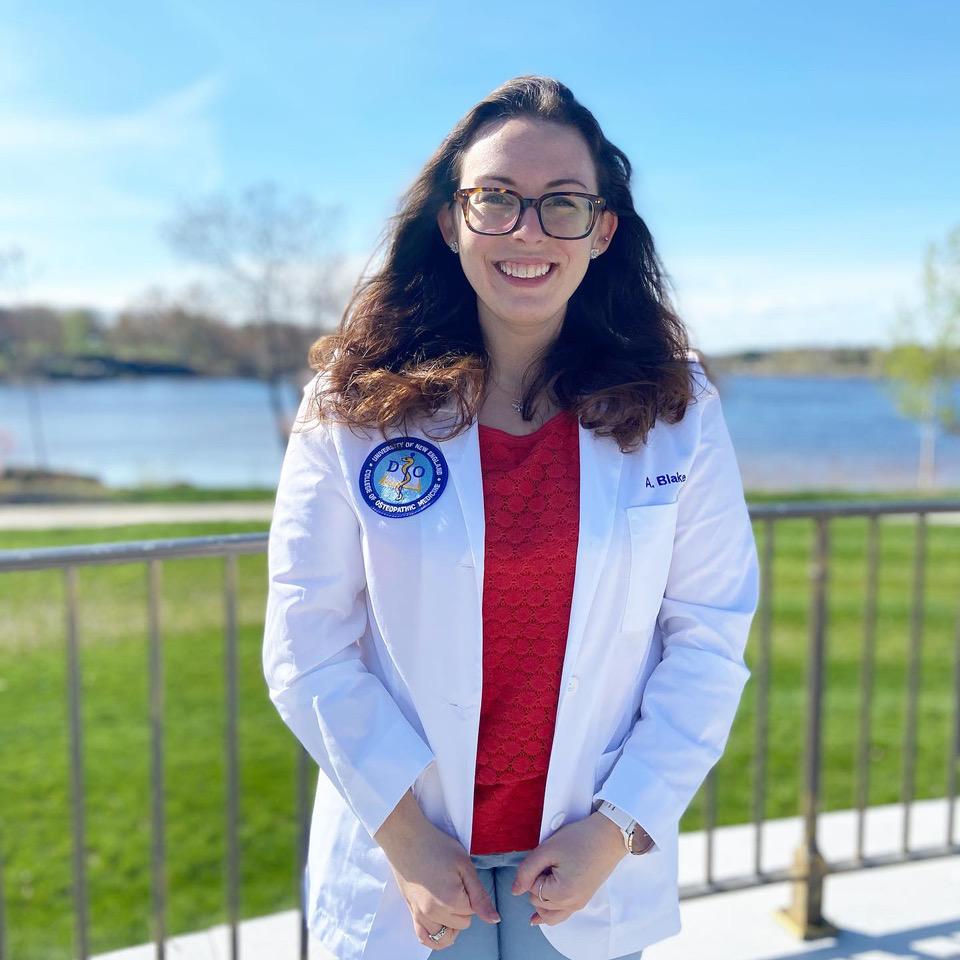 Abby Blake was diagnosed with polycystic ovary syndrome (PCOS) at a young age and was prescribed synthetic oral contraceptive pills when she was in middle school. She continued to use these birth control pills throughout her teenage years, but knew she wanted to discontinue them before she started trying to have a family. She became interested in natural health and followed social media accounts that taught her about the utility of cycle tracking — even before she went to medical school.
When she asked her physician how she could learn more about fertility awareness-based methods (FABMs), she was directed to the Fertility Appreciation Collaborative to Teach the Science (FACTS). Now a 27-year-old third year medical student at the University of New England College of Osteopathic Medicine, Abby has been a FACTS ambassador for about two years. At first, she did a lot of social media work, posting and sharing relevant information.
“One of the best things about FACTS has been finding a cohort of other students from across the country who are also interested in these methods and are open to learning about them,” she said.
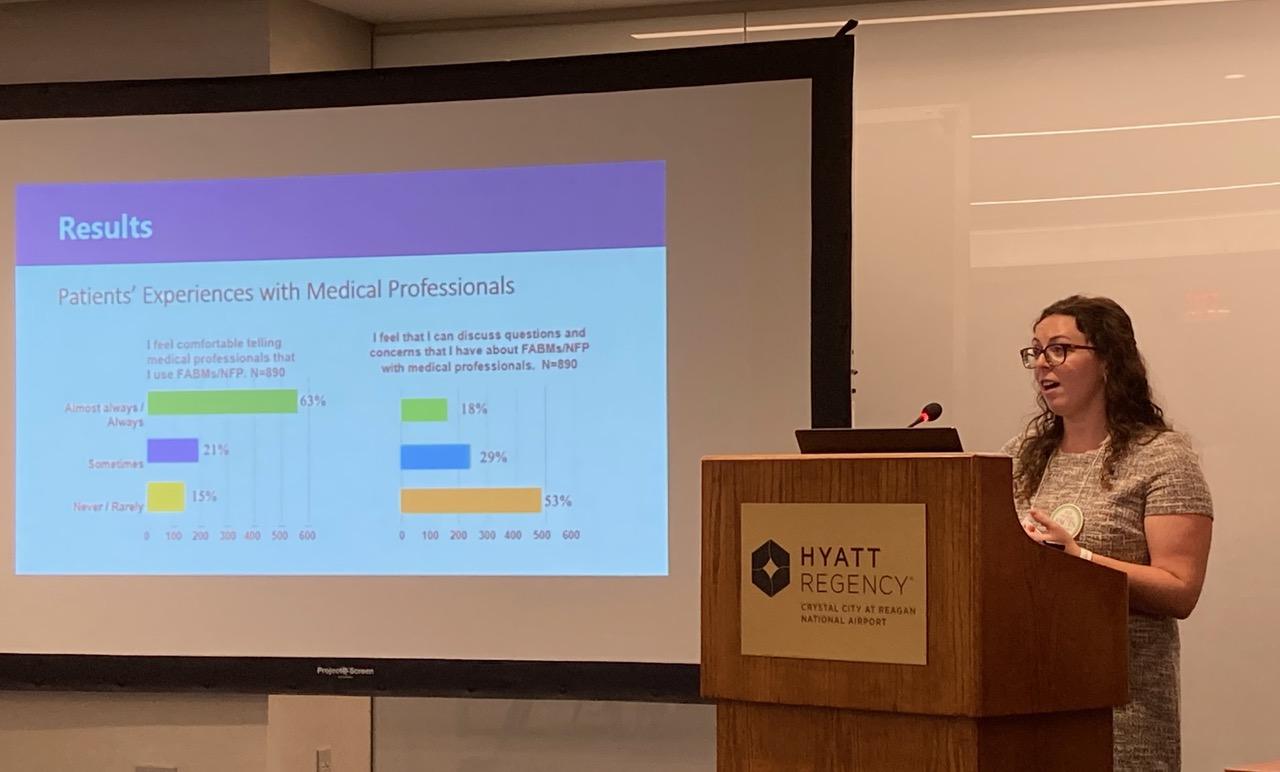
Last year, she said she brought a speaker to her school who gave a presentation on the cycle as the fifth vital sign. More recently, she started getting involved with research that looked at how healthcare clinicians react to patients who say they use FABMs — from the patients’ perspectives. She found that patients are typically very confident in their knowledge of these methods, but their physicians are less likely to be informed on FABMs. This leads to patients losing trust in their physicians’ ability to provide helpful and accurate information on the topic – an important point she made when she presented this research at last month’s Family Medicine Education Consortium (FMEC).
“She found patients are typically very confident in their knowledge of these methods, but their physicians are less likely to be informed on FABMs.”
Abby said she thinks medical schools could be doing more to educate and train future physicians when it comes to fertility care.
“There is so much that I learned through FACTS that I wouldn’t have learned through school,” Abby said. “All of the webinars provide information that we don’t necessarily get in school. We get the very basics of how the hormones influence the cycle, but not how that is reflected via different biomarkers. That’s a huge gap in the curriculum that we’re seeing.”
Abby said she is getting the sense that fellow medical students are increasingly interested in learning more about FABMs and adding it to their toolbox when they care for patients. However, she said, there seems to be some resistance still from working physicians who are less familiar with the methods.
“I think people are becoming more open to these methods,” Abby said. “But it does still feel a little bit niche. We have to seek out the information, and once you find it and share it — people are super open to it. But it’s getting to that part [that’s difficult].”
Abby said she plans to continue her work as an ambassador through residency. The training she has received due to her involvement with FACTS, she added, will directly inform her future practice.
“It offers a more holistic view of women’s health,” Abby said. “It enables me to get to the root cause issues a lot more effectively than other traditional ways of addressing women’s health problems. I know for myself, I found a lot of success in using these methods and then being able to target things like dietary changes and seeing the results in my cycle. … I’m really interested in fertility management as well and helping people to get pregnant, and so I think using these will be a great adjunct for that too.”
The training she has received due to her involvement with FACTS, she added, will directly inform her future practice. “It offers a more holistic view of women’s health,” Abby said.
Abby said she plans to pursue family medicine and is currently in the process of becoming a FEMM-trained medical professional — which, once she completes her training, would make her one of the only physicians certified in the state of Maine.
“We as future physicians have a duty to provide our patients with the best care possible and to really support them in whatever practices that they choose to do as best as we can. FABMs are harmless. They are safe. They are effective. They have no side effects, and they really empower women. It is important for everyone to learn more about these methods – to just be open to them. We owe it to our patients to learn about their bodies the best we can.”
ABOUT THE AUTHOR

Mariel Padilla
Mariel Padilla is a journalist working with us as editor of the FACTS blog. In her full-time job, Mariel writes about the intersection between gender, politics and policy — but she was introduced to the FACTS team by her brother, Mikey. When she’s not writing or editing, she’s probably reading, painting or playing with her niece and nephew who live down the street.
Inspired by what you read?
You can support the ongoing work of FACTS here. To connect with a member of our team, please email development@FACTSaboutFertility.org. Interested in becoming an individual or organizational member? You can learn more and register here. To discuss with a member of our team, please email membership@FACTSaboutFertility.org.