
By: Emily Howell, OMS4
Director’s Note: This patient interview conducted by Emily Howell, a former FACTS elective participant, highlights the value of fertility awareness-based methods (FABMs) as a complement to a healthy, active lifestyle. It also illustrates the various biomarkers used in different FABMs and highlights the importance of education to equip women with the necessary information to choose the best method for them. Lastly, the interview addresses both the importance of working with FABM-trained instructors and medical professionals and the challenges involved when trying to find local practitioners. Check out the FACTS Physician/Clinician Directory to find a practitioner or educator near you!
Meeting Eva
Eva* started using a fertility awareness-based method (FABM) nearly two years ago. She is currently using the Fertility Education and Medical Management (FEMM) method. For her, the road to FABMs began as a personal journey to improve her overall health and fitness. She had experienced years of painful periods and anxiety but had never been on hormonal birth control. She knew she wanted to find alternatives to address her symptoms.
“For Eva, the road to FABMs began as a personal journey to improve her overall health and fitness. She had experienced years of painful periods and anxiety … and wanted to find alternatives to address her symptoms.”
On social media, Eva discovered Daysy, a personal fertility tracker that uses a basal body temperature (BBT) thermometer. For women, BBT will peak at the beginning of the luteal phase, which occurs immediately after ovulation because of a surge of progesterone. Eva began using Daysy, and with additional research into fertility tracking, she discovered cervical mucus was another valuable biomarker to help her learn about her body and ovulation. Monitoring BBT and cervical fluid observations is known as the Sympto-thermal method (STM). In contrast, FEMM utilizes cervical mucus observations sometimes in combination with luteinizing hormone test strips, making it a Sympto-Hormonal Method (SHM).[1] The urine test strips measure the presence or absence of luteinizing hormone to determine a woman’s peak fertility.[1] Since she desired even more information, Eva eventually added BBT to her use of the FEMM method.**
Greater Insight with Proper Coaching and Support
Recently engaged, Eva explained that she and her fiancé were aligned when it came to their future goals. At this time, the couple plans to avoid pregnancy once they are married. In their conversations, Eva shared with her fiancé that she did not want to use hormonal birth control and preferred instead to utilize FABMs to learn about her body and prevent pregnancy.
“Eva shared with her fiancé that she did not want to use hormonal birth control and preferred instead to utilize FABMs to learn about her body and prevent pregnancy.”
Once Eva discovered FEMM, she enrolled in a class and learned how to chart her cervical mucus correctly and use urine test strips to monitor her levels of luteinizing hormone. The instructor tracked three cycles with Eva, checking charts via Zoom meetings. Between sessions, the instructor also gave lessons about the types of hormones involved during different phases of the cycle.
During Eva’s meetings, the instructor noticed her cycle demonstrated a possible excess of estrogen. Given this concern, Eva knew she wanted to find a knowledgeable FEMM-trained physician. However, no such physician was available to her in the Midwest. Through research, she eventually found a naturopathic physician familiar with FABMs. The physician was able to check her charts and support Eva throughout the process as she used FEMM. Knowing she might have excess estrogen based on her charting and guidance from her instructor, Eva asked her physician for additional testing. They then discovered an unbalanced gut microbiome.

Overall Holistic Balance
Eva follows a number of social media accounts to learn about FABMs and enjoys reading more about her health. She loves to discuss FABMs, including with coworkers who wish to learn more about these methods. Eva believes FABMs align well with her healthy and active lifestyle; they are an excellent addition to her work at a chiropractic practice. In her own experience working with a knowledgeable clinician who appreciates the value of using a FABM to monitor her health, Eva notes a difference in her overall health and improved period symptoms and anxiety.
I gained two main insights from speaking with Eva and learning her story. First, I recognized the importance of having instruction in the use of FABMs. Eva greatly appreciated her instructor because learning about fertility or cycle charting for the first time can be overwhelming. As a future physician and a female, I know there are alternative methods for determining ovulation and fertility patterns. Instructors provide essential extra support between physicians and a patient learning about her body’s symptoms and hormones. In addition, Eva is grateful to use both FEMM and BBT observations because the latter does not always match her cervical mucus and luteinizing hormone levels during ovulation and her fertility window.**
“Instructors provide the essential extra support between physicians and a patient learning about her body’s symptoms and hormones.”
Another insight I learned from interviewing Eva was the limited availability of FABM-trained healthcare professionals, particularly FEMM-trained physicians. Eva initially had trouble finding a clinician who also incorporated FABMs into their practice or demonstrated support for the patient while validating her concerns. There are only 90 FEMM-trained clinicians across the United States, including five telehealth FEMM clinicians.[2] Her first introduction to FEMM was through social media, and it was difficult to find a medical professional able to support her health journey. In Eva’s state of residency, there was one licensed telehealth clinician and one in-person option, located over three hours away. Eventually, she was able to find her present naturopathic physician to read her charts and address her other medical conditions and laboratory needs.
*Name has been changed to respect the privacy of the interviewee. All information is shared with permission.
**Director’s Note: This study highlights a user’s decision to combine two methods and their corresponding biomarkers. At FACTS, we encourage women and couples to find the method that is the best fit for them. However, we do not recommend mixing methods or combining biomarkers if they have not been studied in conjunction, as we do not presently have research demonstrating their effectiveness rates for family planning.
References
[1] What is charting? FACTS. https://www.factsaboutfertility.org/what-is-charting/. Published March 16, 2022. Accessed December 1, 2022.
[2] FEMM. Medical providers. FEMM Health. https://femmhealth.org/medical-providers/?_location=united-states&_paged=5. Published November 3, 2022. Accessed December 1, 2022.
ABOUT THE AUTHOR
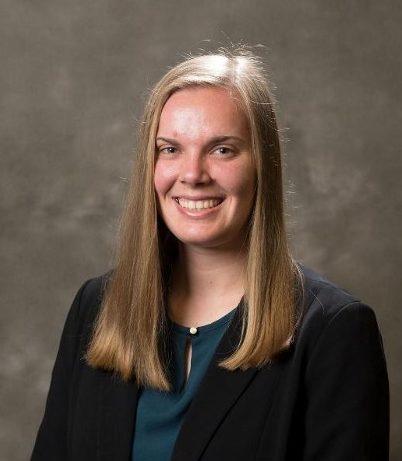 Emily Howell
Emily Howell recently graduated from Lincoln Memorial University- DeBusk College of Osteopathic Medicine Class of 2023 in Harrogate, TN. She completed her undergraduate education at the University of Louisville in Biology while playing Collegiate Lacrosse in Louisville, KY. She will be doing her Intern year at Walter Reed National Military Medical Center in Maryland with a strong interest in neurology as a Navy Military Physician. She enrolled in the FACTS elective to gain a better understanding of FABMs and their importance in women’s health. She wanted to be familiar with the alternative resources available to families and females so they can feel more empowered over their health and reproductive decisions.