
By Megan Leigh
Editor’s Note: This article, summarized by Megan Leigh while taking the FACTS medical elective, reviews emerging evidence on the role of endometrial BCL6 expression in unexplained recurrent pregnancy loss and infertility. It highlights how molecular markers may help reframe “unexplained” diagnoses and guide more targeted evaluation and management of these common conditions. Students, residents, and clinicians interested in expanding their understanding of recurrent pregnancy loss and infertility are invited to register for Part B of our CME Course: Special Topics in FABMs for Helping Couples Achieve Pregnancy. Additionally, to learn more about fertility science and its clinical applications, join us in Peoria, Illinois, for the 2026 FACTS Annual Conference. Today is the last day to save an extra 10% off the registration using the promo code MATCHDAY10. Registration closes next Tuesday, March 31st.
Introduction
Unexplained recurrent pregnancy loss (uRPL) and unexplained infertility (UI) remain frustrating diagnoses for patients and clinicians alike because, by definition, routine evaluations fail to reveal a clear cause. Fox and colleagues asked whether endometrial expression of B-cell CLL/lymphoma 6 (BCL6) – a nuclear protein previously linked to endometriosis and progesterone resistance – is elevated in women with uRPL and UI compared with fertile controls. [1] Understanding such molecular markers could reframe some “unexplained” cases as manifestations of an underlying endometrial dysfunction with direct implications for counseling and management.
Is endometrial expression of B-cell CLL/lymphoma 6 (BCL6) – a nuclear protein previously linked to endometriosis and progesterone resistance – elevated in women with unexplained recurrent pregnancy loss or unexplained infertility?
Methodology
This was a case-control study using archived, LH-timed mid-secretory endometrial biopsies collected at a tertiary university hospital between 2002 and 2016. The authors analyzed 110 samples total (controls n = 28; uRPL n = 29; UI n = 53) using immunohistochemistry (HSCORE) and Western blot to quantify BCL6 protein levels. [1] The primary comparison assessed whether BCL6 expression differed across the three groups and, when elevated, whether laparoscopic evaluation confirmed endometriosis in a subset.
Results
Endometrial BCL6 protein levels were significantly higher in both uRPL and UI groups than in fertile controls. Median HSCOREs were: control 0.3 (IQR 0.02 – 0.5), uRPL 3.0 (1.9 – 3.6), and UI 2.9 (1.6 – 3.1). The differences were highly significant (P < 0.0001). [1]
Overall, 79% of women in the subfertile groups (65/82) displayed elevated BCL6. Among cases with abnormal BCL6 who underwent laparoscopy, most were found to have endometriosis (9/11 uRPL and 20/21 UI). The association remained significant after adjusting for age. [1]

Discussion & Clinical Implications
Fox et al. interpreted these findings as supporting a model in which elevated endometrial BCL6 marks a continuum of progesterone resistance and inflammatory/endometriosis-related endometrial dysfunction that can manifest clinically as either recurrent pregnancy loss or infertility. [1] This builds on prior work showing BCL6 overexpression in the eutopic endometrium of women with endometriosis and its association with poor IVF outcomes. [2] [3] Practically, these data suggest that some patients labeled “unexplained” may benefit from targeted endometrial assessment (including BCL6 testing) and, when appropriate, gynecologic referral for diagnostic laparoscopy or anti-inflammatory/progesterone-restorative therapies.
Some patients labeled “unexplained” may benefit from targeted endometrial assessment (including BCL6 testing) and, when appropriate, gynecologic referral for diagnostic laparoscopy or anti-inflammatory/progesterone-restorative therapies.
Strengths and Limitations
Strengths of the study include a well-characterized archival cohort, multimodal protein assessment (HSCORE and Western blot), and linkage of molecular findings to laparoscopy in a subset. Limitations include its retrospective case-control design, the use of archived samples collected over many years, and potential selection bias since patients who ultimately underwent laparoscopy may differ from those who did not. The authors also used a uRPL definition of two consecutive losses (not three), which may limit comparability with some definitions in the literature. [1]
Relevance to Women’s Health and Fertility Counseling
For clinicians counseling patients about fertility options, including those who track cycles closely or use fertility awareness-based methods (FABMs), these findings are a reminder that reproductive outcomes depend on more than timing alone. While FABMs empower patients to understand cycle timing and fertility windows, molecular endometrial dysfunction, as signaled by elevated BCL6, may still impair implantation or early maintenance of pregnancy, regardless of accurate timing. Thus, patients with persistent infertility or recurrent loss despite good timing may warrant a diagnostic workup that considers endometrial markers and possible endometriosis. [1] [2] [3]
Insights Gained & Questions Raised
Reading this study emphasized for me that “unexplained infertility” is often a placeholder for “unmeasured” physiology. The presence of a measurable marker (BCL6) that correlates with laparoscopically-demonstrable endometriosis reframes patient conversations. Clinicians can honestly tell patients that molecular signals may explain some mysterious losses and that interventions exist to address underlying inflammation or progesterone resistance.
“Unexplained infertility” is often a placeholder for “unmeasured” physiology. The presence of a measurable marker (BCL6) that correlates with laparoscopically- demonstrable endometriosis reframes patient conversations.
This truth raises practical clinical questions: Should BCL6 testing be incorporated earlier in infertility workups? Which patients benefit most from routine testing? For example, can we start regularly testing those with repeated early losses or failed IVF cycles? How should clinicians balance noninvasive molecular testing versus diagnostic laparoscopy?
Future Research Directions
Prospective studies are needed to determine whether identifying and treating BCL6-positive patients improves live birth rates compared with usual care. Additional work should clarify the sensitivity and specificity of BCL6 across diverse populations and whether targeted medical therapies, such as suppression of inflammation or treatments that restore progesterone responsiveness, can alter outcomes. Finally, integrating molecular testing with patient-centered counseling, including a discussion of how such findings align with patients’ reproductive goals and values, is necessary.
References
[1] Fox, C. W., Savaris, R. F., Jeong, J.-W., et al. (2020). Unexplained recurrent pregnancy loss and unexplained infertility: Twins in disguise. Human Reproduction Open, 2020 (1), hoz021. https://doi.org/10.1093/hropen/hoz021
[2] Lessey, B. A., Kim, J. J., et al. (2016). Endometrial BCL6 overexpression in the eutopic endometrium of women with endometriosis. Reproductive Sciences.
[3] Almquist, L. D., Likes, C. E., Stone, B., Brown, K. R., Savaris, R. F., Forstein, D. A., Miller, P. B., & Lessey, B. A. (2017). Endometrial BCL6 testing for the prediction of in vitro fertilization outcomes: A cohort study. Fertility and Sterility, 108 (6), 1063–1069. https://doi.org/10.1016/j.fertnstert.2017.09.017
ABOUT THE AUTHOR
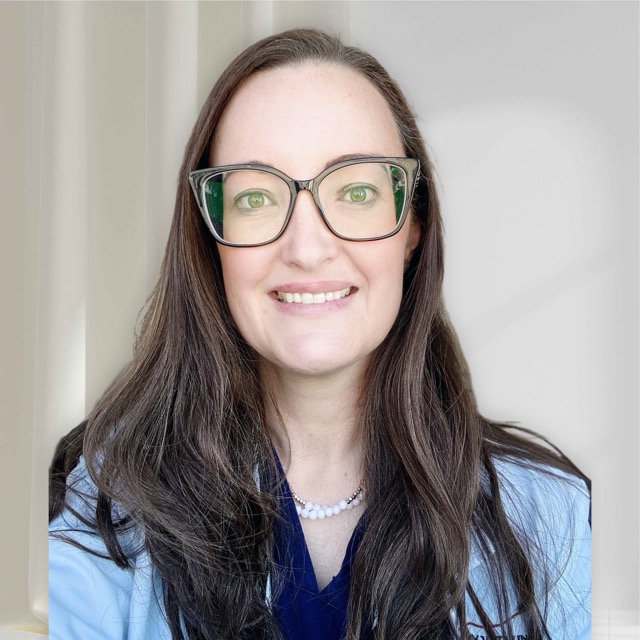 Megan Leigh is a fourth-year medical student at Rocky Vista College of Osteopathic Medicine with plans to apply to the 2026 residency cycle in psychiatry. She has always had an interest in reproductive health and patient-centered fertility counseling and is currently interested in how she can address such topics in psychiatry. She enrolled in the FACTS elective to learn more about women’s health and better understand how fertility knowledge and reproductive science intersect as well as learn about up-to-date treatment protocols and methods.
Inspired by what you read?
You can support the ongoing work of FACTS here. To connect with a member of our team, please email development@FACTSaboutFertility.org. Interested in becoming an individual or organizational member? You can learn more and register here. To discuss with a member of our team, please email membership@FACTSaboutFertility.org.