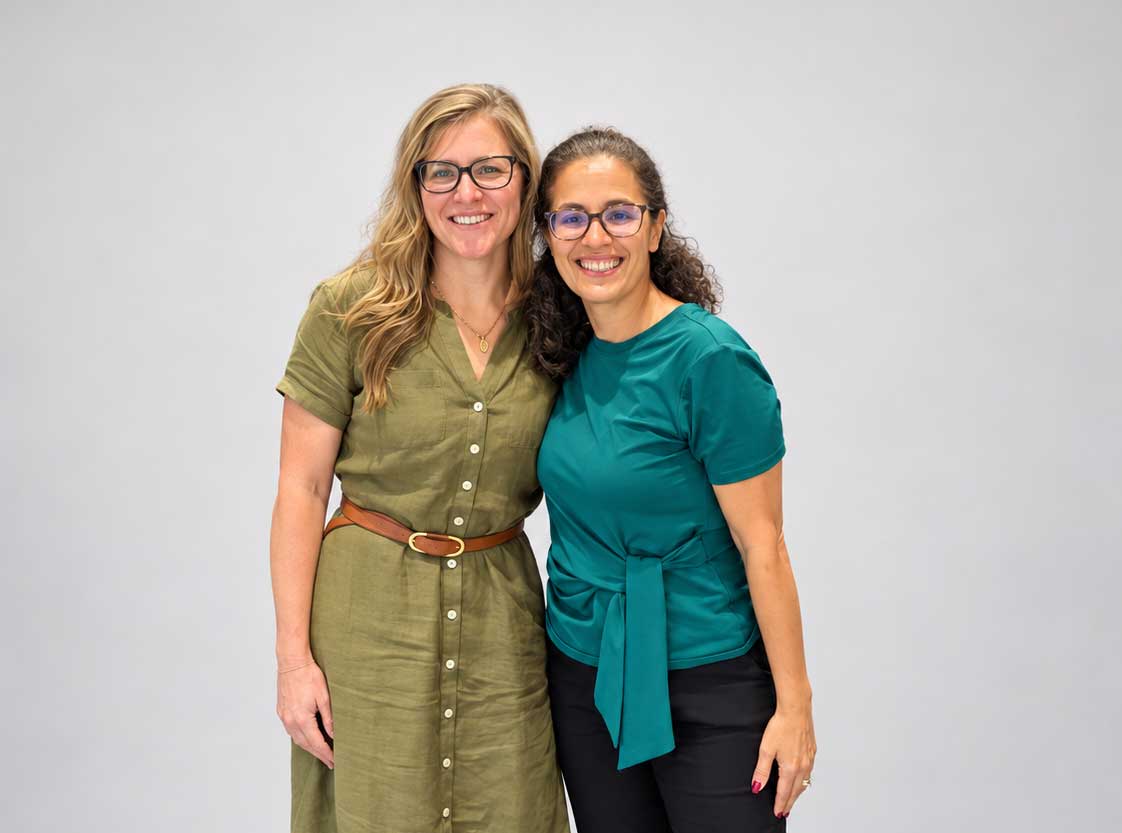

By: Roxane McAllister, RN, BSN
Editor’s Note: This summary of research published in the Lancet in 1996 [1] offers perspective on the use of older oral contraceptives and the probability of risk of a subsequent breast cancer diagnosis. Since then, various formulations and delivery methods have become available, with newer studies assessing the risk of possible adverse events, including cancer, blood clots, and depression, among others. Roxane McAllister summarized the findings from this meta-analysis while on the FACTS elective on fertility awareness.
Introduction
According to the World Health Organization, breast cancer is the most prevalent cancer around the world. [2] In fact, 2.3 million women across the globe were diagnosed with breast cancer in 2020. [2] Most researchers agree breast cancer is likely caused by a combination of genetic, hormonal, and environmental factors. [3] Many studies have sought to determine the risk factors for breast cancer, including the use of oral contraceptives (OCPs). [1] Since the 1960s, an estimated 200 million women around the world have used OCPs, most of them containing synthetic estrogens and progestogens in varying doses and combinations. [1] The following review of research will summarize the meta-analysis [1] published by The Collaborative Group on Hormonal Factors in Breast Cancer to investigate breast cancer risk and the use of oral contraceptives.
“According to the World Health Organization, breast cancer is the most prevalent cancer around the world.”
Methodology
The Collaborative Group gathered data from 54 studies completed in 25 countries that included 53,927 women with breast cancer and 100,239 women without breast cancer. “Overall, 21,567 (41%) of the women with breast cancer and 39,629 (40%) of the women without breast cancer had ever used combined oral contraceptives.” [1] The total data from all the studies included covered 90% of the epidemiological information available on this topic as of the date of publication. The study consisted of a diverse group of women in terms of ethnic origin, age at menarche, height, weight, menopausal status, alcohol use, and family history of breast cancer. The researchers investigated the relative risk (RR) of breast cancer in relation to the timing of exposure to combined OCPs, which includes total duration of use, age at first use, time since first use, and time since last use.
Results
Two main study findings were significant. First, women who were currently taking OCPs and those in the 10 years after discontinuing OCPs showed a small increased RR of being diagnosed with breast cancer. However, there was not a significant excess RR of being diagnosed with breast cancer 10 or more years after discontinuing use. Second, if a woman was diagnosed with breast cancer, the breast cancer was more localized to the breast and less advanced clinically than in breast cancer diagnosed in women who never used oral contraceptives.
“Women who were currently taking OCPs and those in the 10 years after discontinuing OCPs showed a small increased RR of being diagnosed with breast cancer.”
Total Duration
Twenty-five percent of OCP users reported having used them for less than one year. The median total duration of use was three years. There was no significant excess RR of breast cancer among these categories: last use 1-4 years ago, 5-9 years ago, 10-14 years ago, and > 15 years ago. However, there was a slight trend of increasing RR of breast cancer with increasing use of OCPs.
Age at First Use
The median age of first use was 26 with an age range spanning teenagers to women in their early 40s. For each age category (never-user, < 20, 20-24, 25-29, 30-34, and > 35 years old), the RR was slightly increased. The relative risk was greatest for women who began using OCPs as teenagers.
Time Since First Use
“Most women who had used oral contraceptives had begun use between 10 and 20 years before diagnosis of breast cancer.” [1] For each 5-year period of time since first use, there was a slight increased relative risk. However, there was a trend toward a decrease in the relative risk with increasing time since first use.
Time Since Last Use
An increased relative risk was noted in women who were current users and in women who had discontinued use over the previous 1-4 years. Women who had stopped use for 5-9 years had a smaller RR, and the RR for women who had discontinued use for ≥ 10 years was even smaller.
The results were the same as the ‘time since last use’ results when other factors were considered, such as (1) women with or without a family history of breast cancer, (2) women with different ethnicity, reproductive history, height, weight, and background risk, and for (3) women in perimenopause or postmenopause. Additionally, when considering the specific types of estrogen or progestogen in the oral contraceptives, there was not a significant variation in the relative risk of developing breast cancer.
In summary, “the relations observed here between cancer risk and exposure are unusual, since the risk increases soon after first exposure, does not increase with duration of exposure, and returns to normal 10 years after cessation of exposure.” [1]

Discussion
Breast cancer impacts millions of women worldwide. [2] Determining the risk factors for breast cancer would greatly impact women’s health, both through preventive strategies and a potential cure. A strength of this research was the number of studies, sample size, and diversity of the female population the Collaborative was able to stratify to determine which factors may contribute to breast cancer risk.
Needs for further research include the risk of breast cancer and the use of progestogen-only contraceptives and other forms of hormonal contraceptives. [1] Additionally, it is of interest to study the reasons for the differing types of breast cancer diagnosed in users and non-users and the frequency of office visits for each group. Lastly, most of the breast cancers diagnosed in the studies gathered by the Collaborative were from the 1980s. Subsequent research has gathered and reported more recent data.
According to the 2006-2008 National Survey of Family Growth, 11.2 million U.S. women use OCPs; however, 1.5 million of those women use them for non-contraceptive reasons such as painful periods, acne, endometriosis, and irregular periods. [4] Beyond pregnancy prevention, 58% of the 11.2 million users reported using OCPs for menstrual and hormonal health concerns. [4]
Fertility awareness-based methods (FABMs) provide an evidence-based approach to prevent pregnancy [5] and an effective way to track the female cycle that can help diagnose menstrual and hormonal conditions impacting a woman’s health. [6] OCPs alter the natural cycle of female hormones, potentially preventing diagnostic symptoms and biomarkers from being detected. Alternatively, women can use FABMs to track their cycles, biomarkers, and urinary hormones, which will assist FABM-trained medical professionals to determine the potential cause(s) of a woman’s health concerns. Using data tracked on the female chart, FABM-trained medical professionals can identify and treat the root cause of common conditions such as endometriosis, polycystic ovary syndrome (PCOS), infertility, and more.
“OCPs alter the natural cycle of female hormones, potentially preventing diagnostic symptoms and biomarkers from being detected. Alternatively, women can use FABMs to track their cycles, biomarkers, and urinary hormones, which will assist FABM-trained medical professionals to determine the potential cause(s) of a woman’s health concerns.”
This research [1] showed a slight increased relative risk for developing breast cancer in some populations of women who use oral contraceptives. Some women who did not use OCPs also developed breast cancer. Scientists recognize breast cancer may be caused by environmental, hormonal, and/or genetic components. [2] Women need to evaluate the findings of this meta-analysis along with more recent data to determine what they each prefer to use for overall health and family planning. FABMs provide a drug-free alternative for women interested in a more natural evidence-based option for family planning that also offers the benefit of health monitoring. Lastly, to diagnose potential abnormalities as early as possible, it is important for medical professionals to educate women about the latest clinical guidelines for prevention and to encourage regular health maintenance visits.
References
[1] Collaborative Group on Hormonal Factors in Breast Cancer. Breast cancer and hormonal contraceptives: collaborative reanalysis of individual data on 53 297 women with breast cancer and 100 239 women without breast cancer from 54 epidemiological studies. Lancet. 1996;347(1713-27). doi: 10.1016/s0140-6736(96)90806-5
[2] World Health Organization. Breast Cancer. Updated July 12, 2023. Accessed September 15, 2023. https://www.who.int/news-room/fact-sheets/detail/breast-cancer#:~:text=Scope%20of%20the%20problem,the%20world%27s%20most%20prevalent%20cancer
[3] National Institute of Environmental Health Sciences. Updated September 18, 2023. Accessed September 15, 2023. https://www.niehs.nih.gov/health/topics/conditions/breast-cancer/index.cfm#:~:text=Although%20scientists%20have%20identified%20many,%2C%20hormonal%2C%20and%20environmental%20factors
[4] Jones, RK. Beyond Birth Control: The Overlooked Benefits of Oral Contraceptive Pills, New York: Guttmacher Institute. Published online November 2011. https://www.guttmacher.org/sites/default/files/pdfs/pubs/Beyond-Birth-Control.pdf
[5] Pallone, S.R. and Bergus, G.R. Fertility Awareness Based Methods: Another option for family planning. The Journal of the American Board of Family Medicine. 2009;2(147-157). doi: 10.3122/jabfm.2009.02.080038
[6] Alliende, M.E., et al. Towards the Clinical Evaluation of the Luteal Phase in Fertile Women: A preliminary study of normative urinary hormone profiles. Front Public Health. 2018;6(147). doi: 10.3389/fpubh.2018.00147
ABOUT THE AUTHOR
 Roxane McAllister
Roxane McAllister is a registered nurse presently enrolled in the Nurse Midwife and Women’s Health Nurse Practitioner program at Georgetown University. She completed her undergraduate education at the University of Northern Iowa in Cedar Falls, IA and at Mercy College of Health Sciences in Des Moines, IA. She plans to practice as a midwife and women’s health nurse practitioner and is interested in maternal and infant healthcare. She enrolled in the FACTS elective to gain a better understanding of fertility awareness-based methods. She plans to share these methods with future patients so they learn about their options and feel more empowered in their reproductive and overall health.
Inspired by what you read?
You can support the ongoing work of FACTS here. To connect with a member of our team, please email development@FACTSaboutFertility.org. Interested in becoming an individual or organizational member? You can learn more and register here. To discuss with a member of our team, please email membership@FACTSaboutFertility.org.