
By: Caitlin Hoffer
Editor’s Note: Through this interview with a patient, fourth-year medical student Caitlin Hoffer learned what becomes possible when a woman learns to track her cycles while partnering with an FABM-trained physician. Such an approach to reproductive health care enhances the patient-physician relationship by adding new actionable data (trackable biomarkers) and tools (the female chart, apps) that elevate shared decision-making and personalized care to a new level. If you are an FABM-trained physician interested in educating the next generation of medical professionals about FABMs, please sign up now to help teach our students.
Introduction
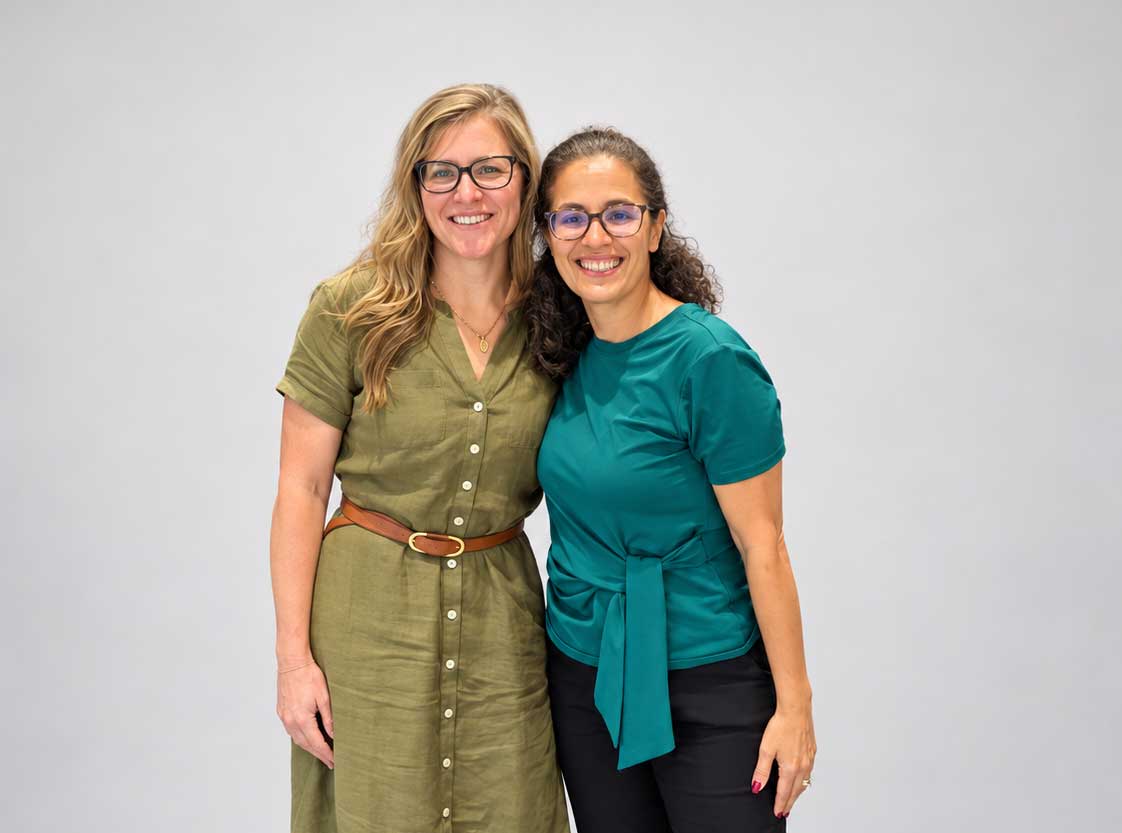
While on the FACTS elective in fertility awareness, I had the privilege of speaking with Violet* about her experience with the SymptoThermal Method (STM). I was surprised to discover that her understanding of her health, hormones, and autonomy shifted when she learned how to chart her cycle.
When she got married, Violet didn’t plan to use a fertility awareness-based method (FABM), but she was having a hard time with side effects from the pill. After just a few months, she experienced fatigue, depression, weight changes, and irritability. Her experience is common; adverse effects accounted for 64.6% of the reasons why women in one study discontinued oral contraceptive pills. [1]
“When she got married, Violet didn’t plan to use a fertility awareness-based method (FABM), but she was having a hard time with side effects from the pill… she experienced fatigue, depression, weight changes, and irritability.”
A New Approach
Violet began searching for alternatives. A friend introduced her to the SymptoThermal Method and shared resources to learn more about the biological markers of fertility. She also connected with a local clinic that supported FABM education.
The SymptoThermal Method combines two key biomarkers: basal body temperature (BBT) and cervical mucus. BBT rises after ovulation due to an increase in progesterone, and signals that ovulation has taken place. As estradiol levels rise and fall, cervical mucus changes in consistency and appearance. By learning to observe and track these changes in biomarkers, Violet learned to identify her fertile window and understand patterns throughout her cycle.
App Tracking is Not a Substitute
The Natural Cycles app is a digital tool cleared by the FDA for contraception and family planning. Although Violet used this app to track her biomarkers, she noted that pairing it with her education in and the SymptoThermal Method made it far more meaningful. While apps may be helpful, the algorithms do not take into account a patient’s individual circumstances. Thus, the effectiveness for pregnancy prevention with an app cannot be assumed to be the same as that achieved by using a particular FABM. [2][3]
Violet was especially struck by the precision of the fertile window. “You’re only fertile for a small window of time, like five or six days,” said Violet. “I didn’t know that. I thought you could get pregnant at any time.”
This realization, which is supported by research on the fertile window and timing of ovulation, gave her confidence in using FABMs to prevent and, eventually, to plan for pregnancy. With perfect use, the SymptoThermal Method can be 98-99% effective at preventing pregnancy. [4]
A Health Management Tool
As Violet discovered, FABMs have valuable applications way beyond pregnancy prevention. By tracking her cycles consistently, she could bring detailed charts to her OB/Gyn physician, which helped guide diagnostic and treatment decisions. “I realized my luteal phase was shorter than normal, and I was having intense PMS symptoms,” she added. Being able to share concrete data with her physician also gave her a sense of control and validation; they became true partners in her care.

“By tracking her cycles consistently, Violet could bring detailed charts to her OB/Gyn physician, which helped guide diagnostic and treatment decisions… they became true partners in her care.”
This approach to medical management is supported by research and is the foundation for Natural Procreative Technology (NaProTechnology), Fertility Education & Medical Management (FEMM), and NeoFertility. Cycle charting with FABMs can help identify hormonal imbalances, luteal phase defects, thyroid issues, signs of conditions such as polycystic ovary syndrome (PCOS), endometriosis, and more. [5][6]
Taking Ownership of Fertility
One of the most powerful perspectives Violet shared was how FABMs changed her relationship with her body. “I just feel more at peace,” she said. “I’m able to understand what’s going on with my own body instead of guessing.”
She reflected on how little she had been taught about reproductive health throughout her adolescent and early adult years. “They don’t give you any education on hormones, like how estrogen rises before ovulation and progesterone after; knowing that helped me understand my body and what’s normal.”
When asked if she would recommend FABMs to others, her answer was emphatic: “100% yes! It’s not just about birth control. It’s about being in tune with your body and sensitive to your health. It helps you know when something’s off — and that is powerful.”
“When asked if she would recommend FABMs to others, her answer was emphatic: “100% yes! It’s not just about birth control. It’s about being in tune with your body.”
Physicians Need Training in FABMs
The typical medical school curriculum does not include FABMs in the context of achieving or preventing pregnancy; I had to search for this information on my own. This is particularly relevant for physicians because 50-61% of women say they are interested in hearing more about FABMs. [7]
Violet’s journey shows what is possible when women are given the tools to understand their own health. As more physicians are trained in evidence-based fertility awareness-based methods, women will gain access to patient-physician collaborations that will continue to transform women’s health.
References
[1] Moreau, C., Cleland, K., & Trussell, J. Contraceptive discontinuation attributed to method dissatisfaction in the United States. Contraception. 2007;76(4):267-272.
[2] Pearson, J. T., Chelstowska, M., Rowland, S. P., Benhar, E., Kopp-Kallner, H., Berglund Scherwitzl, E., Acuna, J., Gemzell Danielsson, K., & Scherwitzl, R. (2021). Contraceptive effectiveness of an FDA-cleared birth control app: Results from the Natural Cycles U.S. cohort. Journal of Women’s Health, 30(6), 782–788. https://doi.org/10.1089/jwh.2020.8547
[3] Manhart, M.D., & Duane, M. A comparison of app-defined fertile days from two fertility tracking apps using identical cycle data. Contraception. 2022;115:12-16. https://doi.org/10.1016/j.contraception.2022.07.007
[4] Frank-Herrmann, P., Heil, J., Gnoth, C., Toledo, E., Baur, S., Pyper, C., Jenetzky, E., Strowitzki, T., & Freundl, G. (2007). The effectiveness of a fertility awareness based method to avoid pregnancy in relation to a couple’s sexual behaviour during the fertile time: A prospective longitudinal study. Human Reproduction, 22(5), 1310–1319. https://doi.org/10.1093/humrep/dem003
[5] NaProTechnology. (n.d.). Natural Procreative Technology: A major breakthrough in monitoring and maintaining a woman’s reproductive and gynecological health. https://naprotechnology.com/
[6] FEMM Health. (n.d.). FEMM: Fertility Education & Medical Management. https://femmhealth.org/
[7] Duane, M., Waechtler, L., May, M., Manda, D., Gomez, N.F., & Stujenske, T.M. Fertility Awareness-Based Methods for Family Planning and Women’s Health: Impact of an Online Elective. Family Medicine. 2024;56(7):414-421. https://doi.org/10.22454/FamMed.2024.562177.
*Names have been changed to respect the privacy of the interviewee. All information is shared with permission.
ABOUT THE AUTHOR
Caitlin Hoffer
Caitlin Hoffer is a fourth-year medical student at Penn State College of Medicine in Hershey, PA. She completed her undergraduate education at Mansfield University in Mansfield, PA. She matched into family medicine at Riverside Family Medicine in Newport News, VA. Hoffer enrolled in the FACTS elective to learn more about natural family planning methods and how to share these methods with future patients so they feel more empowered over their health and reproductive decisions.
Inspired by what you read?
You can support the ongoing work of FACTS here. To connect with a member of our team, please email development@FACTSaboutFertility.org. Interested in becoming an individual or organizational member? You can learn more and register here. To discuss with a member of our team, please email membership@FACTSaboutFertility.org.