
By: Kanza Bajwa, DO
Director’s Note: Fertility awareness-based methods (FABMs) continue to grow in popularity, but each woman’s introduction to the method may look different. Through this interview, Kanza Bajwa, DO met a woman whose search for an alternative to hormonal contraception led her to a book on cycle charting, which opened her eyes to the option of fertility awareness. Fascinated by the concept but recognizing the need for more formal instruction, she enrolled in a class to learn about sympto-thermal methods and ultimately pursued further education to become a certified Justisse educator. To find an FABM-trained educator or physician near you, check out the FACTS Directory!
I had the pleasure of speaking with Olivia,* a woman currently working as a Holistic Reproductive Health Practitioner and certified fertility awareness educator. Olivia’s journey to fertility awareness-based methods (FABMs) began when she decided to stop taking oral contraceptive pills (OCPs). First, she researched alternative methods, then discovered FABMs and began to chart. As she learned more about FABMs, she realized she wanted to share everything she had learned about these methods with other women interested in better understanding their cycles and fertility.
“As she learned more about FABMs, she realized she wanted to share everything she learned about these methods with other women interested in better understanding their cycles and fertility.”
An Introduction to FABMs
When Olivia experienced menarche at age 12, she developed a lot of acne and was promptly placed on OCPs within the first year of getting her period. Although she began taking OCPs to control her acne, she continued taking them for about a decade. She admits that when she was put on the pill, she didn’t understand how OCPs worked, just that they made her body think it was pregnant. She knew it was common to go on the pill and thought: “I am just going to go on the pill, I know everyone does.”
Olivia eventually got off the pill at age 22; she got married at 20; and knew she wanted to get pregnant at some point.
“I threw my pills away mid-pack, and never looked back, ” she said.
Knowing that she was done with OCPs, Olivia went online to research other birth control options. She first found the rhythm method, but at the recommendation of her doctor, she read Taking Charge of Your Fertility by Toni Weschler to gain a better understanding of modern FABMs. Olivia then started charting her cycle by observing her cervical mucus and basal body temperature. However, she was not yet confident that she was charting correctly and took a class to learn more, with Lisa Hendrickson-Jack, host of The Fertility Friday podcast. Lisa’s 10-week course helped Olivia learn a lot about her body and her cycle. This course even inspired her to become an educator herself.
“I thought to myself, I need to do what you do; this is amazing,” she said. “I wanted to shout this from the rooftops.”
Olivia decided to take a course from Justisse College International to learn the Justisse Method, and she now teaches women how to chart their cycle. After years of charting with FABMs, Olivia has used them for the full range of their potential applications, both to avoid and achieve pregnancy, as well as for postpartum care and general health monitoring.
“After years of charting with FABMs, Olivia has used them for the full range of their potential applications, both to avoid and achieve pregnancy, as well as for postpartum care and general health monitoring.”

Challenges for Women Starting to Use FABMs
There are challenges women and couples must overcome when first starting to use FABMs. Therefore, it is critical to get help at the start to learn to chart correctly.
“With fertility awareness-based methods, I think it’s a fact that they are 100% user-dependent,” Olivia said.
She also added that there is a need for intrinsic motivation to use these methods effectively, whether using these methods to achieve family-planning goals or simply to monitor one’s health. For her, part of her initial motivation was the hope of getting pregnant and the pressure that she experienced.
“I would definitely say in the beginning it felt like everything’s on me,” she said. “If I make a mistake then, you know, we could end up not getting pregnant.”
Beyond the necessity of motivation, Olivia also recalled the hurdles she faced when she first learned about FABMs. At that time, the biggest challenges for her were the lack of resources and difficulty finding accurate information. Early on, she assumed she could get pregnant at any time during her cycle, and she did not understand how OCPs worked, despite having taken them for about a decade.
“I was really bitter that no one had told me this information and also felt that I needed to tell everyone about what I had learned,” Olivia said.
After discovering FABMs, Olivia experienced challenges with learning a specific method. Specifically, learning how to characterize her cervical mucus proved difficult as she transitioned off OCPs. She read Taking Charge of Your Fertility, but remarked, “My mucus didn’t look anything like what the book was describing.”
Amidst her search for more information, she took the Justisse course and was glad to have found it.
“I really am grateful to have stumbled upon the Justisse method because I really do think it’s one of the most comprehensive methods, especially when we’re talking about overall wellness and using the menstrual cycle as the fifth vital sign.”
Advice for Other Women
Olivia’s clients begin charting for many different reasons. Some complement their charting journey with dietary or lifestyle changes, particularly if they are charting their cycles with the goal of monitoring their reproductive health. Regardless of the reason a woman starts charting with an FABM, Olivia would recommend that women begin learning from a certified instructor to facilitate a smooth learning process, as well as to identify the method that is the best fit. Not every method is perfectly suited to every woman.
“Regardless of the reason a woman starts charting with an FABM, Olivia would recommend that women begin learning from a certified instructor to facilitate a smooth learning process, as well as to identify the method that is the best fit.”
“I have heard from clients that they find that the Justisse method is too complicated,” Olivia said. “They get frustrated, and they go somewhere else.”
Olivia also mentioned the pressure that some women experience when trying to use these methods accurately for family planning. Women may find themselves tired, busy, and stressed, especially during transitional times, such as during the postpartum period. She realizes that her clients may not always be consistent with their charting. For this reason, it is all the more important that women find a method that works best for them, and it may involve changing methods during different seasons of a woman’s reproductive lifetime.
Looking forward, Olivia hopes to someday be part of a team with other medical professionals and physicians. She hopes more physicians would refer patients to trained instructors who can help educate women who want to learn more about FABMs and the ways they can use them to track their cycles.
“I can be part of a person’s health care team, but I can’t be their family medicine physician or their gynecologist,” Olivia said. “So in a perfect world, we would have medical professionals telling their patients: ‘Here are your birth control options.’ And among these options, they would also talk about fertility awareness-based methods.”
*Name has been changed to respect the privacy of the interviewee, and all information is shared with permission.
ABOUT THE AUTHOR
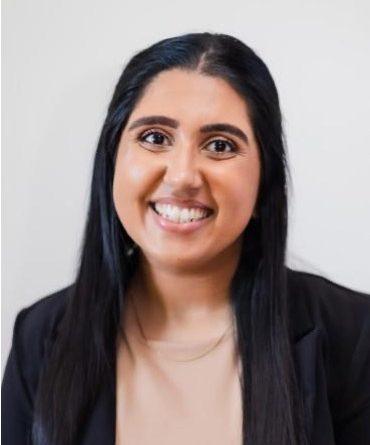 Kanza Bajwa
Kanza Bajwa, DO is a graduate of Rowan University School of Osteopathic Medicine in Stratford, NJ. She will be continuing her training in Family Medicine at Lancaster General Hospital in Lancaster, PA. She has been passionate about women’s health from the start of her medical career. She now looks forward to using everything she learned during the FACTS elective to better care for women across their lifetimes. She also looks forward to having conversations with her patients about ways that can incorporate charting into their everyday routine to monitor their health.
Inspired by what you read?
You can support the ongoing work of FACTS here. To connect with a member of our team, please email development@FACTSaboutFertility.org. Interested in becoming an individual or organizational member? You can learn more and register here. To discuss with a member of our team, please email membership@FACTSaboutFertility.org.
 <
<